Succession Planting Radishes & Baby Carrots in Balcony Troughs
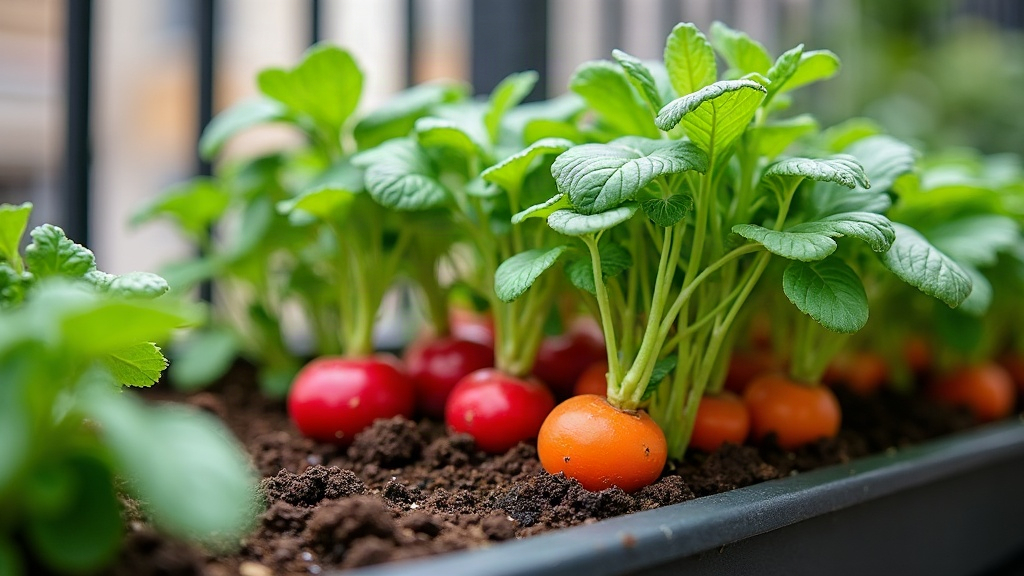
Why Radishes and Baby Carrots Work So Well in Fall
Honestly, fall beats summer for these two root crops, hands down.
- Cooler soil prevents bolting. Plant radishes in July heat and half of them turn woody or shoot straight to seed before you can blink. In the mellower days of September and October, they stay crisp and mild instead.
- Shallow roots fit shallow troughs. Baby and short carrot varieties (Paris Market, Little Finger, Adelaide) only need 6-8 inches of soil, which happens to match pretty much every standard railing trough on the market.
- Fast turnaround. Radishes are ready in 21-28 days, baby carrots in 50-60. That speed is exactly why succession sowing still works even as the days get shorter.
- Frost tolerance. Both shrug off a light frost. Carrots actually taste sweeter afterward, since the cold triggers the plant to convert stored starches into sugar.
Choosing the Right Trough and Soil
Grab a trough at least 6 inches deep, and go as long as your railing allows. More length means more planting real estate per square foot, simple as that.
- Drainage is non-negotiable. If the holes look stingy, drill a few more. Root vegetables sitting in soggy soil rot fast, sometimes within days.
- Use a loose, stone-free mix. Potting soil, compost, and perlite in roughly a 2:1:1 ratio keeps carrots growing straight instead of forking around rocks or clumps.
- Skip fresh manure or heavy nitrogen fertilizer. It fuels leafy top growth instead of the root you actually want, and it’s a common cause of forked, twisted carrots.
Setting Up a Succession Schedule
The core idea is simple: split your trough into sections, or use a few separate troughs, and stagger your sowing dates so nothing matures all at once.
- Week 1: Sow radish seeds in one-third of the trough, about ½ inch deep, spaced 1 inch apart.
- Week 1 (a separate trough or section): Sow baby carrot seeds thinly, ¼ inch deep. Once seedlings hit about 2 inches tall, thin them to 1-2 inches apart.
- Week 2-3: Sow the next radish batch in the second section as soon as the first section’s seedlings are up and clearly growing.
- Every 10-14 days after that, keep sowing a fresh short row of radishes right as you pull the previous one. This rhythm is really the whole point of succession planting.
- Carrots can wait longer between sowings since they take more time to mature. A new short row every 2-3 weeks is plenty.
A cheap popsicle stick with the sowing date written on it saves you a lot of guessing later. It’s surprisingly easy to forget which row went in first.
Watering and Care Through Fall
- Keep the soil consistently moist, not soggy, especially during germination. Shallow soil dries out fast, and radish and carrot seeds won’t forgive a dry spell.
- As daylight shrinks, ease off watering frequency a bit, but don’t let the trough go bone dry even once.
- Thin carrot seedlings without mercy. Crowded carrots stay skinny and stunted, no matter how good your soil is.
- Once nighttime temps start flirting with freezing, drape a lightweight frost cloth over the trough. That alone can stretch your harvest window by several extra weeks.
Harvesting for Continuous Supply
- Pull radishes the moment their shoulders poke above the soil and reach roughly ¾ to 1 inch wide. Wait too long and they turn pithy and bland.
- Harvest baby carrots once you spot orange tops at the soil line, typically 50-60 days in. No need to wait for full-size roots.
- Always harvest the oldest section first, leaving younger sections to keep developing. That’s what keeps the whole trough cycling in rotation rather than emptying out all at once.
Common Mistakes to Avoid
- Sowing everything in one go. That defeats the entire strategy. Stagger it on purpose.
- Overcrowding. Both crops end up small and misshapen when they’re packed too tight.
- Letting radishes linger too long past maturity. They crack and turn bitter fast.
- Ignoring the shrinking daylight. As October slides into November, growth slows down noticeably. Plan your last radish sowing about 4 weeks before your average first hard frost, and your last carrot sowing about 8 weeks before.
Final Thoughts
A few shallow troughs, a loose staggered planting schedule, and a bit of discipline with watering turn a tiny balcony into a running supply of crisp radishes and sweet baby carrots well into fall. Instead of one overwhelming glut, you get something fresh to pull almost every week. Start small, keep track of your sowing dates, and let the cooler autumn air handle the rest.