Self-Watering Globes vs Drip Stakes for Weekend Away Herb Watering
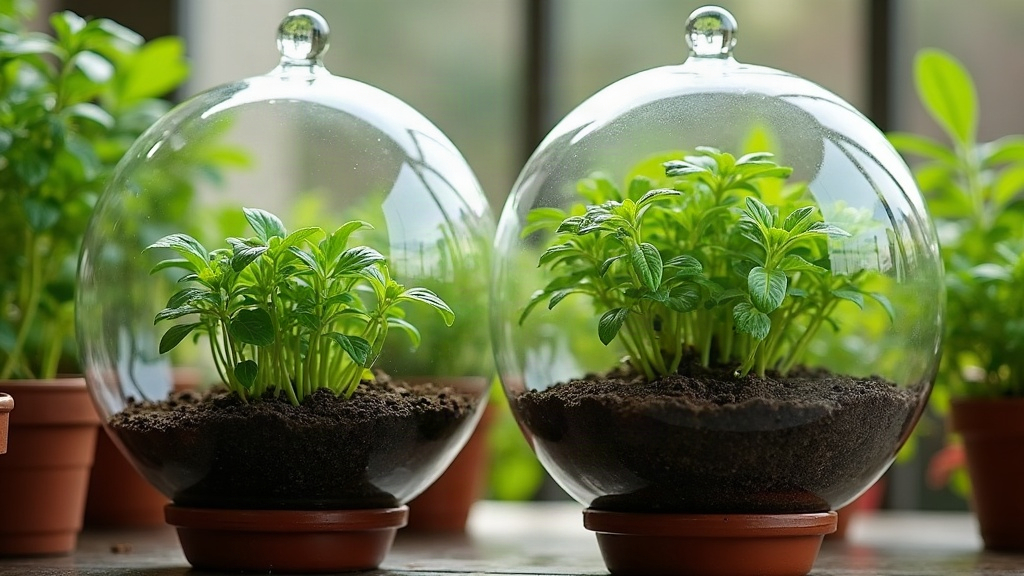
If you’re heading away for a weekend and worried your balcony basil, mint, or rosemary will shrivel up without you, the two most popular DIY fixes are self-watering globes (glass or plastic bulbs you stick into the soil) and drip stakes (small devices connected to a water bottle or reservoir that release water slowly). Both can keep herbs alive for 2-5 days, but honestly, they behave very differently depending on your pot size, soil type, and how much sun your balcony gets. Here’s exactly which one to pick and when.
How Each Option Actually Works
Self-Watering Globes
These are sealed glass or plastic bulbs with a thin neck. You fill them with water, flip them upside down, and push the neck into moist soil. As the soil dries out and the air pressure inside shifts, water gets pulled out gradually, almost like the plant is sipping from a tiny straw.
- Best for: terracotta or plastic pots 6-10 inches wide
- Typical duration: 3-7 days per fill, depending on globe size
- Cost: $3-$12 per globe (glass versions last years; plastic ones crack faster)
Drip Stakes
These are small plastic valves that screw onto a standard soda or water bottle. You fill the bottle, flip the whole assembly upside down, and insert the stake into the soil. Water drips at a slow, somewhat adjustable rate, think of it as a makeshift IV drip for your parsley.
- Best for: larger pots, window boxes, or multiple herbs sharing one container
- Typical duration: 2-4 days with a 500ml-1L bottle; longer with a 2L bottle
- Cost: $1-$5 per stake (packs of 4-8 are common)
Head-to-Head Comparison
| Factor | Self-Watering Globes | Drip Stakes |
|---|---|---|
| Setup time | Under 1 minute | 2-3 minutes (attaching bottle) |
| Water capacity | Small (globe size fixed) | Scalable (any bottle size) |
| Reliability in heat | Can empty too fast in direct sun | More consistent, but can clog in fine soil |
| Best pot type | Single, small-medium pots | Shared containers, window boxes |
| Reusability | High (glass lasts years) | High (just reuse old bottles) |
| Visual appeal | Decorative, often sold as plant decor | Functional, less attractive but hidden easily |
| Risk of overwatering | Low | Moderate if flow isn’t adjusted |
Which One Fits Your Herbs?
Choose self-watering globes if:
- You have individual pots of basil, parsley, or thyme on a sunny windowsill or balcony rail
- You want something low-effort and reusable with minimal mess
- Your trip is 3-5 days and pots are smaller than 10 inches
Choose drip stakes if:
- You have a long window box with multiple herbs sharing soil
- You’re away longer than 5 days and need a bigger water reserve
- You already have empty plastic bottles lying around and want a near-zero-cost solution
Common Mistakes to Avoid
- Using globes in full afternoon sun. They drain faster than expected in heat, sometimes emptying in 24 hours instead of 3-5 days. If your balcony gets blasted by sun from noon until 5pm, don’t expect a weekend’s worth of water from one fill.
- Inserting drip stakes into compacted soil. If the soil is too dense, water just sits on top instead of soaking in. Loosen the top inch with a fork or chopstick before inserting the stake.
- Not pre-watering before you leave. Both methods work best as a supplement to soil that’s already moist, not a replacement for a good soak the morning you depart. Skip this step and even the best globe won’t save a bone-dry pot.
- Using stakes in terracotta pots without checking drainage. Terracotta dries out faster than plastic or glazed ceramic, so pair it with a slightly larger bottle or move the pot to partial shade for the weekend.
A Practical Hybrid Approach
For balconies with mixed herb setups, say, rosemary in a small pot and a window box of mint and chives, many gardeners just combine both: globes for the solo pots, drip stakes for the shared box. This costs under $20 total and covers a full weekend without any single point of failure. If one device underperforms, the other picks up the slack.
Quick Decision Checklist
- Trip length 2-3 days + small individual pots → globes
- Trip length 4-7 days + shared containers → drip stakes
- Full sun balcony → either option works, but check and refill reservoirs the morning you leave
- Budget under $10 for multiple herbs → drip stakes (reuse bottles you already have)
Conclusion
Both self-watering globes and drip stakes solve the same weekend-away problem, just in different ways. Globes suit small, individual pots and look a lot cleaner on a shelf or railing, while drip stakes scale better for shared containers and longer trips, and cost next to nothing if you’re recycling bottles anyway. Whichever you pick, water your herbs thoroughly before leaving, and do a short test run a few days ahead of your trip. That way you’ll know exactly how long your setup actually lasts before you need it to perform for real.