Chicken Grit vs Horticultural Sand for Balcony Pot Drainage
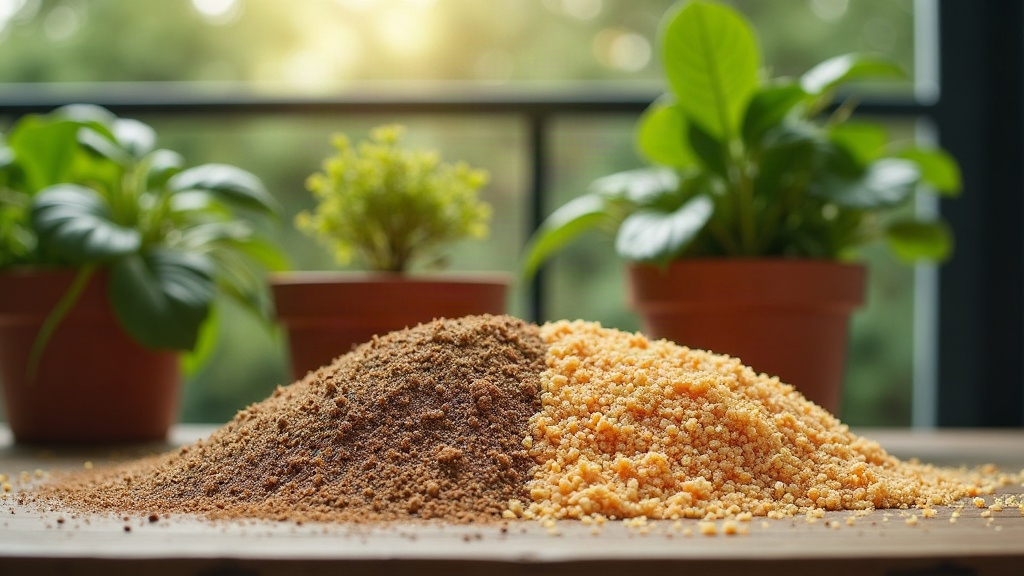
If your balcony pots are still soggy three days after watering, more pots or less water won’t fix it. The real culprit is usually what’s (or isn’t) mixed into the soil. The two amendments gardeners reach for most are chicken grit and horticultural sand. Short version: chicken grit wins for most heavy balcony potting mixes, since it improves drainage per volume without weighing things down, doesn’t compact over time, and costs less when bought in bulk. Horticultural sand still earns its keep though, particularly for succulents and bonsai.
Why Heavy Potting Mixes Need Grit at All
Bagged potting soil leans heavily on peat, coir, or compost fines. Out in the garden bed that’s not a problem, since gravity and soil structure let excess water drain away naturally. Stick that same mix in a container, though, and water only has one way out: straight down through a single hole. Fine particles swell, clog the pore spaces, and before long you’re looking at something closer to mud than soil. A coarse, angular amendment solves this by wedging open permanent air gaps, gaps that stay put even after a season or two of the organic matter breaking down and settling.
What Chicken Grit Actually Is
Chicken grit is crushed granite or flint, normally sold at feed stores to help poultry digest their food. For gardening, pay attention to two things:
- Insoluble (granite) grit, not oyster shell or limestone grit. Those dissolve over time and push your soil pH upward.
- “Starter/chick” size (about 1/16 inch) works for seed-starting mixes; “grower/layer” size (1/8 to 3/16 inch) suits mature container plants better.
Pros:
- Hard, angular particles that shrug off crushing and compaction, year after year
- Cheap. A 40-50 lb bag runs about $12-18 at most farm supply stores, and that’s enough for several large pots
- Lighter than you’d expect, because the irregular shape creates more air pocket volume per pound compared to sand
- Easy to find, even outside big cities. If there’s a Tractor Supply nearby, you’re set
Cons:
- You have to read the bag carefully. “Insoluble” or granite-based, never calcium-based
- Kicks up some dust when you pour it, so a mask isn’t a bad idea while mixing
What Horticultural Sand Brings to the Mix
Horticultural sand (sometimes labeled “sharp sand” or “coarse sand”) is washed, graded quartz with larger, more uniform grains than the play sand or builder’s sand you’d find at a hardware store.
Pros:
- Ideal for succulent, cactus, and bonsai mixes, where fast drainage and minimal organic content matter more than anything else
- Chemically neutral and inert. It simply won’t break down on you
- Works nicely alongside pumice or perlite in lean, fast-draining blends
Cons:
- Heavy. A 5-gallon bucket of wet sand can tip the scales at 60+ pounds, which is a genuine concern if your balcony or railing planter has a weight limit
- Big-box “sand” is often too fine, and fine sand causes the exact compaction problem you’re trying to solve. Look specifically for “coarse” or “sharp” on the label
- More expensive than chicken grit for the same drainage benefit, bought in equal bulk
Head-to-Head for Balcony Containers
| Factor | Chicken Grit | Horticultural Sand |
|---|---|---|
| Weight added | Low-moderate | High |
| Cost per pot | Lower | Higher |
| Long-term structure | Excellent, won’t crush | Good, but fine sand can compact |
| Best for | Vegetables, perennials, large mixed containers | Succulents, cacti, bonsai, alpine plants |
| Availability | Feed stores, farm supply | Garden centers, hardware stores |
Recommended Ratios
- General balcony vegetables/annuals: 1 part grit to 4-5 parts potting mix (roughly 15-20% by volume)
- Perennials and shrubs in large pots: 1 part grit to 6 parts mix
- Succulents/cacti: 1 part coarse sand plus 1 part perlite/pumice to 2 parts mix
- Mixed approach: Plenty of experienced container gardeners run both at once. Grit handles the structural work, while a smaller dose of sand fine-tunes drainage in cactus-specific blends
Common Mistakes to Avoid
- Reaching for fine “play sand.” It clogs pore spaces exactly the way the original fine soil particles did
- Grabbing oyster-shell grit by mistake. It slowly nudges soil pH upward and can stress acid-loving plants like blueberries
- Adding grit but ignoring the drainage hole or saucer setup. A good amendment can’t save a pot that’s still sitting in a puddle because the hole is blocked
Conclusion
For a typical heavy balcony mix, vegetables, herbs, annual flowers, mixed perennial containers, chicken grit (insoluble, granite-based) is the smarter pick: cheaper, lighter, and it holds its structure for years. Save horticultural sand for the specialty fast-draining blends, succulents, cacti, bonsai, where its fine, inert texture actually matches what the plant needs. Not sure which way to go? Keep both on hand. Between the two, you’ll have what it takes to grow almost anything on a balcony.