Keeping Container Herbs Alive in a Wind Tunnel Alley Between Buildings
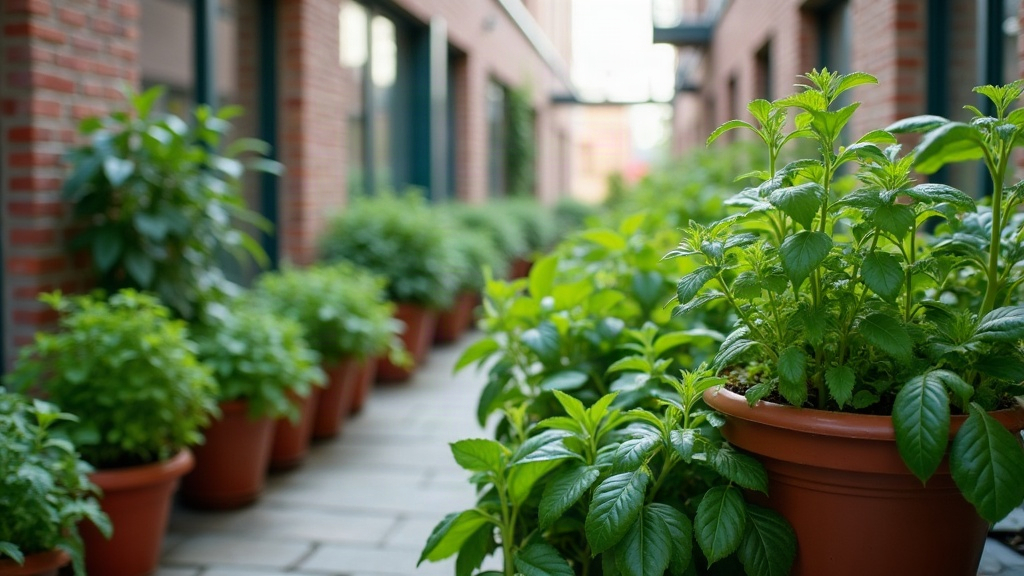
If you’ve ever tried gardening in the gap between two buildings, you already know the problem. Wind doesn’t just blow through there, it speeds up. That’s the “Venturi effect” at work: air gets squeezed through a tight space and accelerates fast, turning what should be a mild breeze into a relentless, herb-shredding gust. The good news? Keeping container herbs alive in a wind tunnel alley is entirely doable. You just need the right pots, the right plants, and a couple of smart windbreaks in place.
Why Wind Tunnels Are So Brutal on Herbs
Open rooftops and balconies get wind too, but narrow passages between buildings do something different: they funnel and compress air currents. The result is a handful of specific headaches:
- Constant desiccation. Wind pulls moisture out of leaves and soil way faster than still air does, even on a cool, overcast day. You’d think cooler air means less drying, but moving air trumps temperature here.
- Physical damage. We’re not just talking about the occasional storm. Sustained gusts snap stems, shred leaves, and knock pots clean over, day after day.
- Unpredictable gusting. Wind bounces off walls and reverses direction without warning. One minute it’s calm, the next your basil is bent sideways.
- Fewer pollinator visits. Bees tend to skip high-wind corridors altogether, which is a real problem if you want flowering herbs like basil or chives to actually set seed.
Once you understand these mechanics, you can plan ahead instead of scrambling to save plants after they’ve already taken a beating.
Choose Wind-Tolerant Herbs First
Some herbs just shrug wind off. Others fold instantly. Start with the tough ones:
- Thyme — low, woody, naturally built to resist wind.
- Rosemary — shrubby and tough, especially once it’s established.
- Oregano and marjoram — they sprawl low across the pot instead of reaching upward.
- Chives — grass-like leaves bend with the wind rather than snapping.
- Sage — sturdy stems, thick leaves, hard to tear.
Steer clear of tall, floppy growers like dill, cilantro that’s bolted and gone to seed, or lemongrass, unless you’re prepared to stake them seriously. Their height basically turns them into a sail.
Pot Selection: Heavy, Low, and Wide
A lightweight plastic pot in a wind tunnel is just asking for trouble. Instead:
- Go heavy — terracotta or concrete planters sit low and resist tipping.
- Go wide and squat, not tall and narrow.
- Consider self-watering containers. The built-in reservoir buys you time when the wind is draining moisture fast.
Stuck with lightweight pots? Weigh the base down with rocks or bricks, or cluster several together so they brace and shield one another.
Build a Windbreak Without Blocking Light
Here’s the real game-changer: slow the wind down before it ever reaches your plants. A few ways to do it:
- Mesh windbreak screens (aim for 40-50% permeability) mounted on a railing or trellis. Solid barriers sound logical, but they actually create worse turbulence on the leeward side. Permeable mesh slows wind gradually and works noticeably better.
- Bamboo or reed fencing panels — attractive, and they filter wind nicely too.
- Living barriers. Ornamental grasses or shrubby herbs like rosemary, planted on the windward side, take the brunt of it and protect the more delicate herbs sitting behind them.
- Furniture and structure placement. Even one lattice panel or a vertical garden structure can cut wind speed by roughly half in the shadow it casts.
Watering and Soil Adjustments
Containers in a wind tunnel dry out fast, sometimes needing water twice a day once summer hits. A few adjustments help:
- Use a moisture-retentive potting mix, boosted with compost or coco coir.
- Mulch the surface with bark chips or gravel to slow evaporation.
- Group pots together so they create a small, shared humid microclimate.
- Check soil daily, not on a fixed schedule. Wind conditions swing day to day, and yesterday’s watering plan might not hold today.
Staking and Pruning for Wind Resilience
- Stake taller herbs like dill or fennel using bamboo stakes and soft ties.
- Prune regularly so herbs stay bushy and low instead of leggy and top-heavy.
- Pinch flower stalks on basil and cilantro early, before they shoot up into tall, wind-vulnerable growth.
Conclusion
A wind tunnel alley doesn’t have to be a lost cause for container herbs. Pick tough, low-growing species, switch to heavy, squat pots, put up a permeable windbreak, and stay on top of watering, and that gusty gap between two buildings can turn into a surprisingly productive little herb garden. Start with thyme, rosemary, and oregano as your foundation. Once those are thriving, you can experiment with more delicate herbs tucked safely behind a solid windbreak.