Growing Malabar Spinach on a Sunny Balcony Trellis in Summer
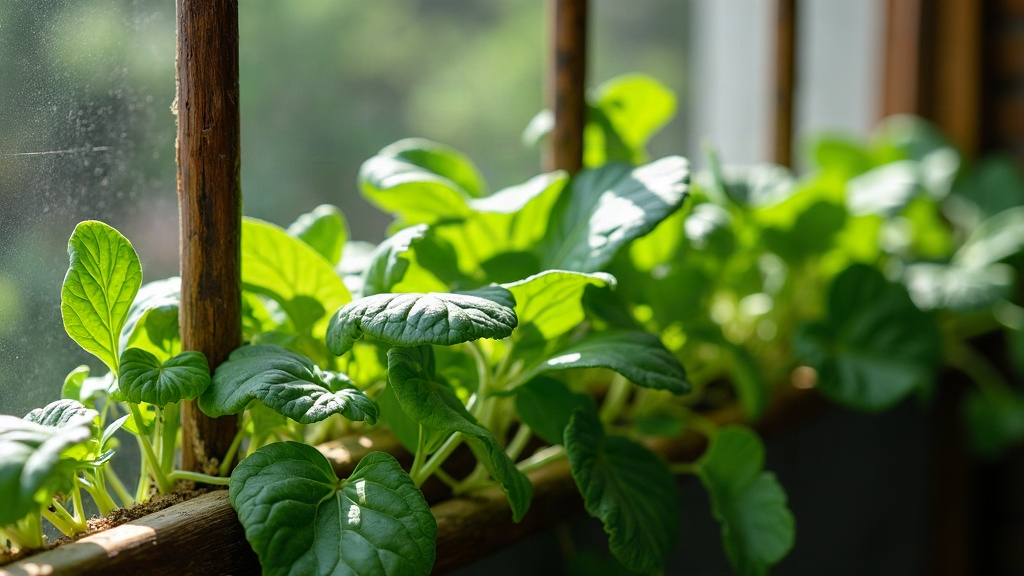
Malabar spinach is one of the rare leafy greens that genuinely perks up when the mercury climbs, which makes it a great pick for a sunny balcony trellis right around the time lettuce and true spinach have already bolted and given up. This vigorous, heat-loving vine hands you glossy, succulent leaves for continuous harvest from June clear through the first frost, and it does all that climbing a small trellis instead of taking over your limited balcony floor.
Why Malabar Spinach Loves Balcony Heat
Cool-season spinach (Spinacia oleracea) sulks and bolts the moment things warm up, but Malabar spinach (Basella alba or Basella rubra) is a tropical vine wired the opposite way: it stalls in cold weather and actually speeds up as temperatures push into the 85-95°F (29-35°C) range. Balconies, especially south- or west-facing ones that bake all afternoon, are usually brutal on delicate greens. For this plant, that’s basically paradise.
Key advantages for balcony growers:
- Vertical habit – climbs 6-10 feet, so it needs almost no floor footprint
- Thick, waxy leaves – shrug off intense sun and the reflected heat bouncing off railings or walls
- Continuous harvest – the more you pick, the more it branches and produces
- Ornamental bonus – the red-stemmed variety (Basella rubra) adds a splash of color to a trellis alongside its edible leaves
Setting Up Your Trellis and Container
Choosing the Container
Go deep, at least 12-16 inches wide and just as deep, because Malabar spinach builds a substantial root system to keep all that vining growth fed. A fabric grow bag or a glazed ceramic pot both do the job, just make sure drainage holes are generous. This plant loves moisture but hates sitting in soggy, waterlogged soil.
Trellis Options for Tight Spaces
- Bamboo A-frame or teepee trellis – lightweight and easy to reposition
- Wall-mounted trellis netting – ideal if your balcony railing gets full sun
- Obelisk trellis – decorative and stable even on windy high-rise balconies
Set the trellis up at planting time. Malabar spinach’s twining stems need guidance from the start, and once the mature vines are loaded with leaves, trying to add support afterward is a losing battle.
Planting and Peak-Summer Care
Soil and Sun
Use a rich, well-draining potting mix amended with compost. Malabar spinach wants at least 6 hours of direct sun daily, and it handles unfiltered summer sun noticeably better than most vegetables you’d grow alongside it.
Watering in Peak Heat
Balcony containers dry out fast come July and August. Water deeply:
- Once daily in moderate heat
- Twice daily during heatwaves above 95°F (35°C)
- Always check soil moisture 2 inches down before watering; the mix should stay consistently moist, never soggy
A layer of mulch (straw, coconut coir, or shredded bark) on top of the soil cuts down evaporation a lot on hot, exposed balconies.
Feeding
Given how fast it grows, Malabar spinach eats. Apply a balanced liquid fertilizer (10-10-10 or fish emulsion) every 2 weeks, or work slow-release granules into the mix at planting time.
Harvesting Tips
- Start picking young leaves and tender stem tips once the vine hits about 12 inches tall
- Snip the top few inches of each stem to push the plant toward bushier branching
- Don’t let vines flower and set seed too early, it can slow leaf production down
- Leaves are best cooked (sautéed, tossed into soups, or stir-fried), since raw leaves have that slightly mucilaginous texture you’d recognize from okra
Common Problems and Fixes
| Issue | Likely Cause | Fix |
|---|---|---|
| Yellowing lower leaves | Underwatering or nitrogen deficiency | Increase watering frequency, add fertilizer |
| Slow growth despite heat | Root-bound container | Repot to a larger container |
| Leggy, sparse vines | Insufficient sun | Relocate to the sunniest balcony spot available |
| Aphids on new growth | Common in hot, still air | Spray with insecticidal soap or a strong water jet |
Conclusion
Growing Malabar spinach on a sunny balcony trellis flips the script on the toughest stretch of summer, the exact season most container gardens quietly give up on, and turns it into your most productive window of the year. A deep container, sturdy vertical support, steady watering, and regular feeding are really all it takes. Do that, and this heat-tolerant vine keeps handing you a low-maintenance, nutrient-dense harvest right through the hottest months anyone’s balcony has to offer.