Removing Ants That Farm Aphids on Potted Balcony Citrus
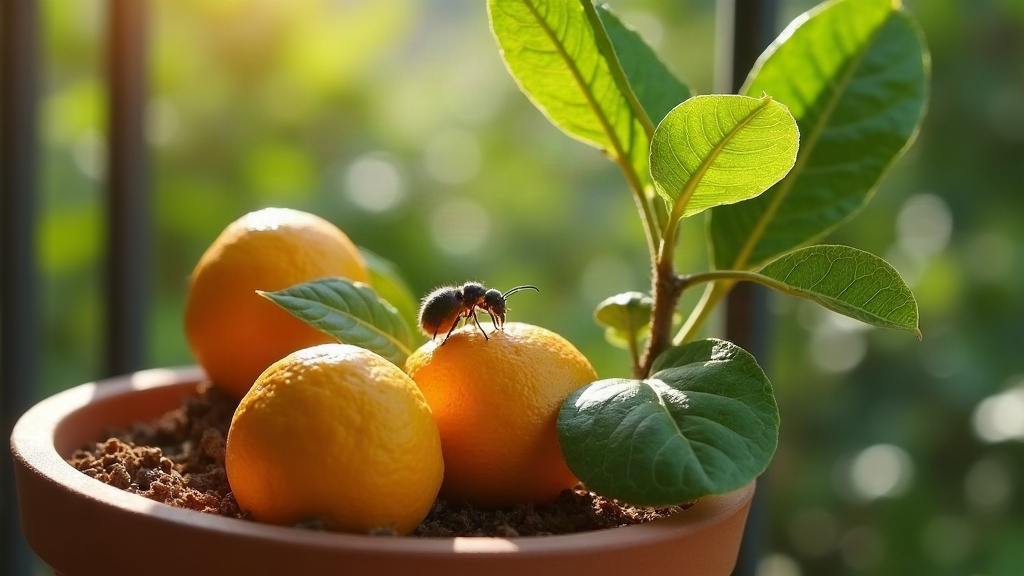
If you’ve spotted a line of ants marching up your potted lemon or lime tree, don’t assume they’re after your fruit. They’re probably farming aphids. Ants guard aphid colonies in exchange for honeydew, that sweet, sticky stuff aphids excrete, and this little partnership can wreck a balcony citrus tree fast: distorted new growth, sticky leaves, black sooty mold creeping across the foliage. The fix isn’t complicated, though. Go after both the ants and the aphids at once, and you can usually clear this up in one to two weeks.
Why Ants and Aphids Team Up
Aphids feed on citrus sap and leave behind honeydew, basically sugar water that ants can’t resist. In exchange, ants act as bodyguards, chasing off ladybugs, lacewings, and other predators that would otherwise wipe the aphids out. Some ants will even relocate aphids to fresher leaves, like a farmer moving livestock to better pasture. The catch: as long as the ants are on patrol, nothing is going to control that aphid population for you.
Here’s what to look for:
- Ant trails running along the trunk, branches, or the rim of the pot
- New leaves that are curled, yellowing, or feel tacky to the touch
- Black sooty mold forming on leaf surfaces
- Clusters of tiny green, black, or brown aphids camped out on tender shoots and flower buds
Step 1: Break the Ant Highway
Ants are the protectors here, so cut off their access before you even think about treating the aphids directly. Skip this step and you’re just fighting symptoms.
Create a Physical Barrier
- Wrap a band of petroleum jelly, horticultural glue, or a tanglefoot-style sticky barrier around the trunk or the pot rim. Ants hit it and turn back, every time.
- If the pot is pushed up against a railing or a wall, pull it a few inches away. Check for leaves touching nearby surfaces too, ants will use any bridge they can find.
Eliminate Nearby Nests
- Check the potting soil, the underside of the pot, and any cracks nearby for nests. A diluted neem oil drench or a borax-based bait (placed away from the foliage, never directly on leaves) will take out the colony without hurting the tree.
- Skip the broad-spectrum insecticide sprays near a flowering citrus tree. They’ll kill off pollinators and beneficial insects right along with the ants.
Step 2: Treat the Aphids Directly
With the ants blocked out, the aphids are sitting ducks, exposed to whatever predators (or sprays) come their way.
Manual Removal
- Hit the aphid clusters with a strong jet of water from a hose or spray bottle. Aim at the undersides of leaves and the new growth tips, that’s where they cluster.
- Do this every 2-3 days for about a week. It interrupts their breeding cycle enough to make a real dent.
Insecticidal Soap or Neem Oil
- Mix 1-2 tablespoons of mild liquid soap (plain soap, not dish detergent) into a liter of water and spray thoroughly, again focusing on leaf undersides.
- Or go with a diluted neem oil spray, following the product’s mixing instructions. Spray early morning or evening, never in full sun, or you risk burning the leaves.
- Reapply every 5-7 days until the aphids are gone for good.
Encourage Natural Predators
- Ladybugs, lacewings, and hoverfly larvae eat aphids for a living. Once the ants stop guarding the buffet, these predators can move back in and keep numbers down on their own.
- If your balcony has room, a few pots of alyssum or dill nearby can pull in these beneficial insects. Small thing, but it helps.
Preventing Recurrence
- Check weekly: Look over new growth and leaf undersides before an aphid colony gets big enough for ants to notice and start “farming.”
- Prune crowded growth: Aphids love tender, tightly packed new shoots. A light prune opens up airflow and removes their favorite hiding spots.
- Go easy on nitrogen: Too much nitrogen fertilizer pushes out soft, lush growth, exactly what aphids prefer to feed on. Stick with a balanced citrus fertilizer instead.
- Maintain the sticky barrier: Petroleum jelly and glue barriers wear off, especially after rain. Reapply every few weeks.
When to Consider Repotting
If ants have actually nested inside the pot’s soil, repotting is often the quickest way out. Pull the plant, gently rinse the root ball, toss the old soil (it may be full of eggs or nest tunnels you can’t see), and replant into a fresh, well-draining citrus mix. It’s a bit of work, but it resets everything in one go.
Conclusion
Ants farming aphids on a potted balcony citrus tree is annoying, sure, but it’s far from a lost cause. Block the ants with a sticky barrier, hit the aphids with water sprays, insecticidal soap, or neem oil, and you break up their little arrangement fast. Once natural predators are free to do their job, they’ll finish what you started. Keep checking weekly, keep pruning, and your citrus tree should stay healthy and productive right through the season.